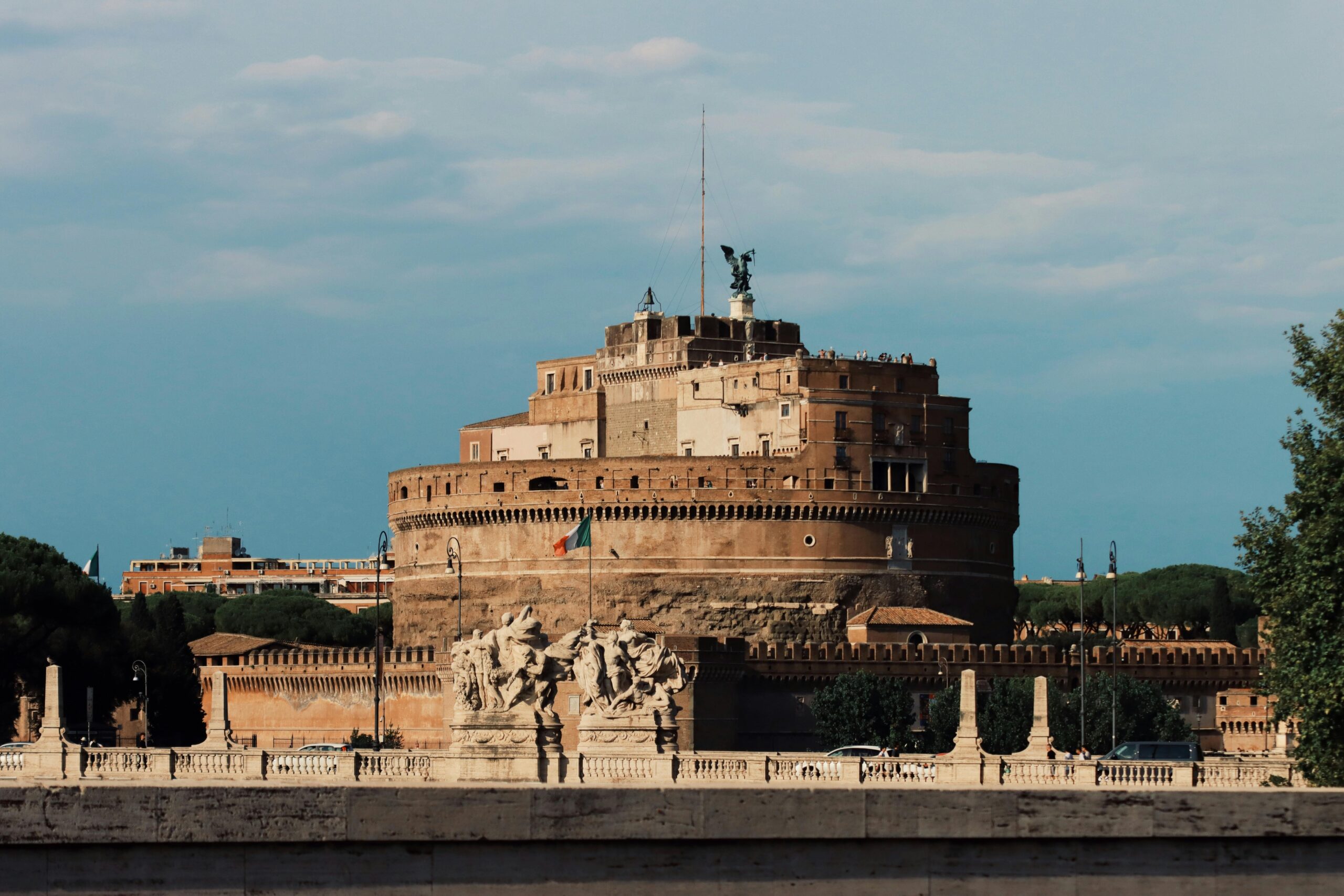
Rising above the Tiber only a short walk from the Vatican, Castel Sant’Angelo is one of those Roman monuments whose appearance immediately suggests a story. In fact, it contains many stories: imperial tomb, fortress, papal residence, prison and strategic refuge, all layered within the same massive structure.
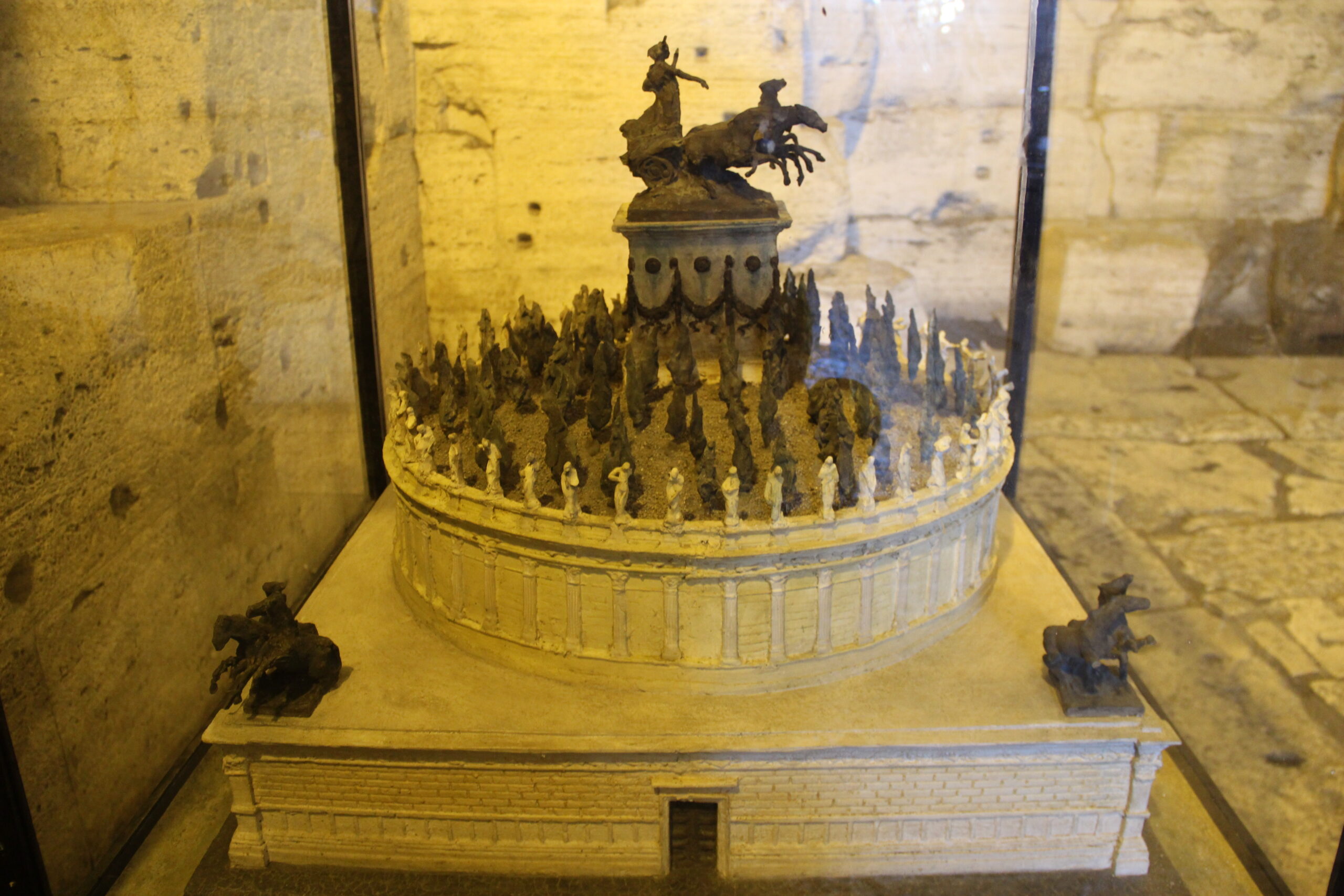
Begin by understanding its origins as the mausoleum built for Emperor Hadrian in the second century AD. The circular core and monumental scale were designed to project imperial power long after death, but Rome changed around the building and its purpose changed with it. As defensive walls expanded and political instability transformed the city, the mausoleum gradually became a fortress controlling an important approach across the Tiber
With your guide, move through courtyards, ramps, corridors and rooms that reveal these different phases. Learn how Popes used the castle as a secure refuge and residence, and how its proximity to the Vatican made it a key part of papal defense. Stories of sieges, prisoners, ceremonies and political intrigue bring the stone architecture to life, showing why Castel Sant’Angelo has played such a distinctive role in Roman history.
The building is also closely associated with the Passetto di Borgo, the fortified passage linking the castle to the Vatican area. Even when sections are not accessible, its history helps explain how the monument functioned as a last line of protection during moments of crisis. Inside, later decorative rooms and papal apartments contrast with the heavier military spaces below.
As you climb higher, the reward is a different view of Rome. Terraces and elevated points look over Ponte Sant’Angelo, the river, the dome of St. Peter’s and the rooftops of the historic center. The panorama makes the castle’s strategic position immediately clear and provides a memorable visual conclusion to the visit.
Rather than presenting a single period, Castel Sant’Angelo offers a compressed history of the city itself. Roman engineering, medieval defense, Renaissance papal power and modern Rome coexist within a single monument, making this walking tour an ideal choice for travelers who enjoy history with a little mystery and an exceptional viewpoint at the end.
Please Note : Access to Castel Sant’Angelo is subject to museum opening times, security controls, restoration work and local restrictions. Some sections include stairs, ramps and uneven historic surfaces and may not be suitable for guests with limited mobility. The route and accessible terraces may change because of weather or operational requirements.